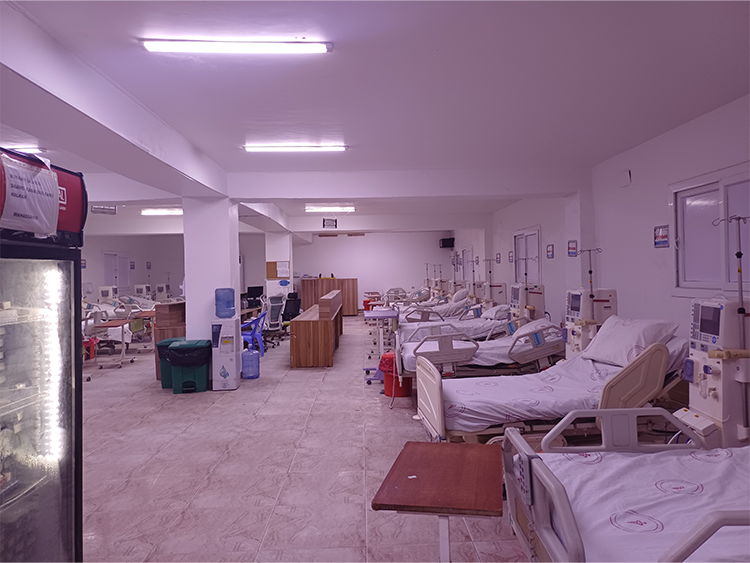
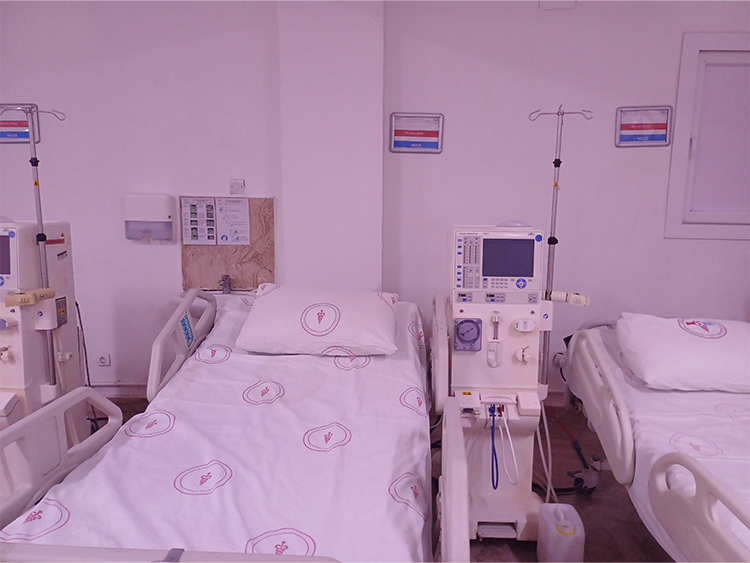
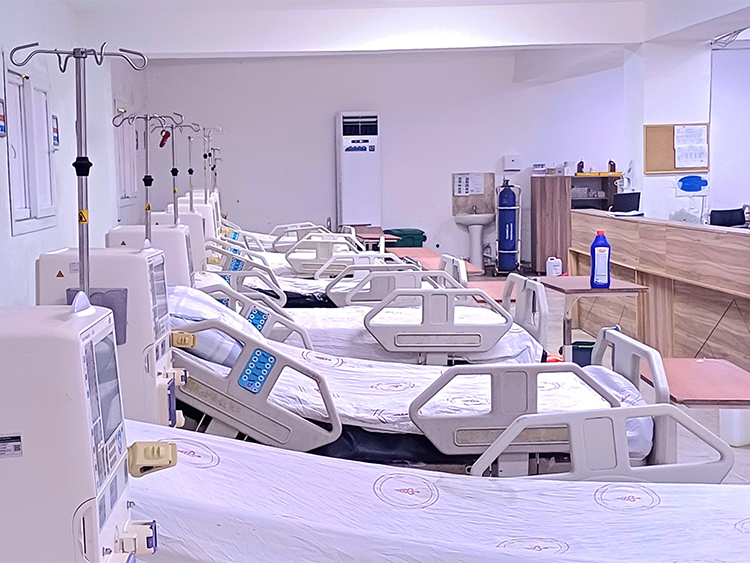

Hemodialysis unit is a where patients with kidney failure receive hemodialysis treatment. This life-saving procedure is essential for individuals whose kidneys can no longer effectively filter waste products, excess fluids, and toxins from the blood. Hemodialysis helps maintain a balance of electrolytes and prevents complications associated with kidney failure. By using advanced dialysis machines, medical professionals ensure that patients receive safe and effective treatment to sustain their health and well-being. This hemodialysis unit is the largest in Somalia, equipped with 33 hemodialysis machines, including three designated for Hepatitis B Virus (HBV) patients and one for Hepatitis C Virus (HCV) patients.
Hemodialysis Machine
functions as an artificial kidney. It removes waste products, excess electrolytes, and fluids from the bloodstream when the kidneys are no longer able to perform this function. The machine contains a dialyzer, also known as an artificial kidney, which has a semi-permeable membrane that filters out toxins while allowing essential components of the blood to remain. A special cleansing fluid called dialysate is used in the filtration process to help draw out waste and maintain the proper chemical balance in the body. Once the blood is purified, it is returned to the patient’s body. This process ensures that the buildup of harmful substances, which can lead to serious health complications, is effectively managed.
Patient Preparation
Before a patient can undergo hemodialysis, a vascular access point must be established to allow the dialysis machine to withdraw and return blood efficiently. There are three main types of vascular access: an arteriovenous (AV) fistula, an AV graft, and a central venous catheter. An AV fistula, which is the preferred method, is a surgically created connection between an artery and a vein, usually in the arm. It provides a durable, long-term access point with fewer complications. If a fistula is not feasible, an AV graft may be used, which involves placing a synthetic tube between an artery and a vein. In emergency situations or when long-term access is not yet available, a central venous catheter is inserted into a large vein in the neck, chest, or groin for temporary use. Proper preparation of the access site is critical to minimize infection risks and ensure an efficient dialysis process.
Dialysis Process
The hemodialysis process begins when the patient’s blood is drawn through the vascular access and directed into the dialysis machine. Inside the machine, the blood flows through the dialyzer, where waste products, excess electrolytes, and fluids are filtered out. The dialysate, a specially formulated fluid, helps facilitate the removal of toxins while maintaining the body’s necessary chemical balance. After filtration, the cleaned blood is returned to the patient’s body. Each dialysis session typically lasts between three to five hours and is performed three times a week. However, the frequency and duration of dialysis sessions may vary depending on the patient’s medical condition and individual needs. Throughout the process, healthcare professionals closely monitor the patient to ensure the treatment is effective and that no complications arise.
Monitoring During Dialysis
Continuous monitoring is a critical aspect of hemodialysis to ensure patient safety and treatment effectiveness. Healthcare professionals regularly check the patient’s vital signs, including blood pressure, heart rate, and oxygen levels, to detect any abnormalities. The rate of blood flow, filtration efficiency, and the amount of fluid being removed are also closely observed to prevent complications such as low blood pressure or excessive fluid loss. Any signs of distress, such as dizziness, nausea, or muscle cramps, are addressed immediately to ensure patient comfort and stability. Advanced dialysis machines are equipped with alarms and sensors that alert medical staff if any issues arise, ensuring a prompt response to any potential problems.
Medical Staff in the Hemodialysis Unit
A hemodialysis unit is staffed by a highly trained team of healthcare professionals who work together to provide comprehensive care to patients. Nephrologists, who specialize in kidney diseases, oversee dialysis treatment plans and monitor the patient’s overall kidney health. Dialysis nurses play a crucial role in administering treatments, monitoring patient conditions, and managing complications that may arise during dialysis sessions. Dialysis technicians are responsible for setting up and maintaining the dialysis machines, ensuring they function correctly. Dietitians provide nutritional counseling to help patients follow a kidney-friendly diet that supports their overall health and prevents complications. In some cases, social workers are also part of the team, assisting patients with emotional support, financial concerns, and lifestyle adjustments related to dialysis treatment.
Post-Dialysis Care
After each dialysis session, patients undergo a post-treatment assessment to ensure they are stable before leaving the unit. The vascular access site is carefully examined for signs of bleeding, infection, or clotting, and necessary precautions are taken to prevent complications. Patients may experience fatigue, dizziness, or muscle cramps following dialysis, and they are encouraged to rest and hydrate adequately. Healthcare providers offer guidance on managing potential side effects and provide recommendations on diet, fluid intake, and medication adherence. Patients are advised to monitor their access site at home for any signs of infection or complications and to report any concerns to their healthcare team promptly.
Dialysate Fluid
The dialysate is a specially designed fluid that plays a crucial role in the hemodialysis process. It is carefully balanced to facilitate the exchange of waste products while maintaining essential electrolytes such as sodium, calcium, and potassium. Unlike the patient’s blood, the dialysate does not contain waste products like urea or creatinine, allowing these toxins to diffuse from the blood into the dialysate solution. The proper composition of dialysate is essential to prevent imbalances in the body and ensure effective waste removal. It is continuously purified and monitored during dialysis sessions to maintain its effectiveness and safety.
Key Considerations for Hemodialysis Patients
Hemodialysis treatment must be carefully tailored to each patient’s medical condition, lifestyle, and overall health. The frequency of dialysis sessions depends on the severity of kidney disease and the patient’s fluid and waste buildup. While hemodialysis is a life-sustaining treatment, it also carries certain risks and potential complications, including infections, blood clots, low blood pressure, and imbalances in electrolytes. Patients undergoing hemodialysis are often required to follow a strict diet that limits fluid intake and controls the consumption of certain nutrients such as sodium, potassium, and phosphorus. Adhering to dietary restrictions helps prevent excessive waste accumulation and reduces the strain on the dialysis process. Regular follow-ups with healthcare providers are necessary to monitor the patient’s progress and make necessary adjustments to their treatment plan.
Focus of the Hemodialysis Unit
The primary objective of the hemodialysis unit is to provide high-quality, safe, and effective dialysis treatments to patients with kidney failure. The unit is designed to create a sterile and controlled environment where patients receive personalized care tailored to their medical needs. With 33 dialysis machines, including dedicated HBV and HCV machines, this facility is the largest hemodialysis center in Somalia. Healthcare professionals work diligently to monitor patient safety, manage potential complications, and ensure the highest standards of treatment. In addition to dialysis procedures, the unit emphasizes patient education, dietary counseling, and emotional support to improve the overall quality of life for individuals undergoing long-term dialysis. By integrating advanced technology, skilled medical staff, and a patient-centered approach, the hemodialysis unit plays a vital role in managing kidney disease and promoting patient well-being.